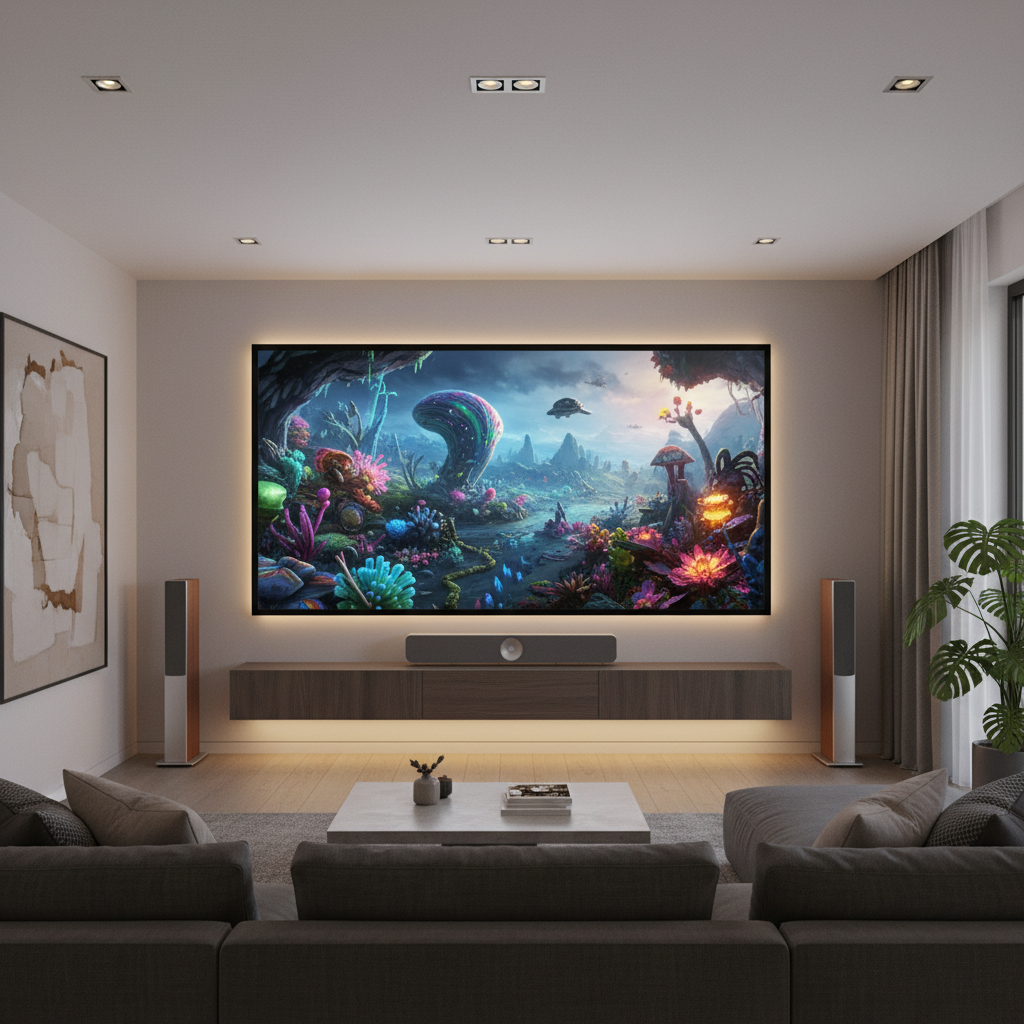
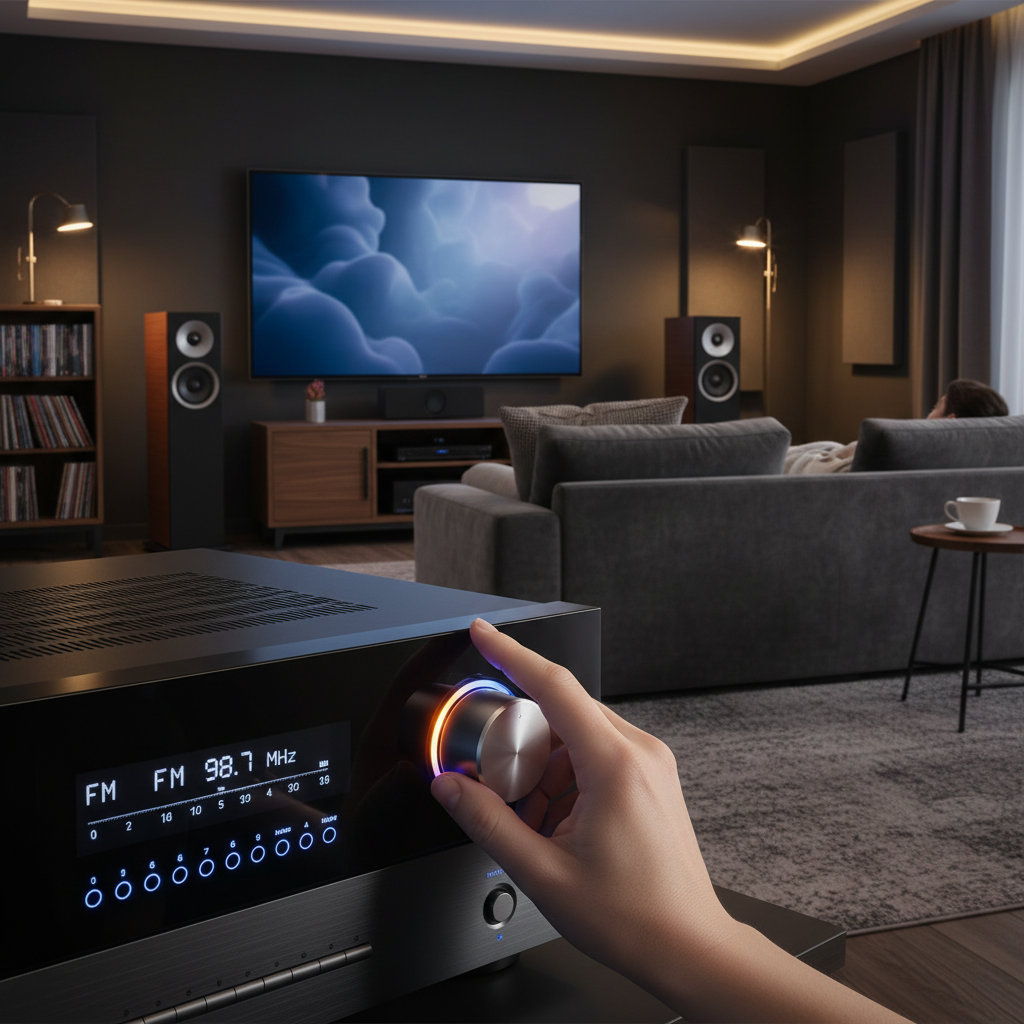
Ever dreamed of a cinematic experience without leaving your couch? Setting up a home theater system can transform your living room, but with so many options, choosing the right one can feel daunting. This guide will help you navigate the choices, ensuring you pick a system that delivers immersive audio and stunning visuals without overwhelming technical jargon. We’ll focus on how to pick the perfect system for your space and budget, making your entertainment dreams a reality.
Understanding Your Space and Needs
Before diving into specific products, consider where your home theater system will live. Is it a sprawling living room that can handle a full 5.1 surround sound setup with a large projector screen, or a cozy bedroom where a soundbar and a smaller TV are more appropriate? Think about the primary use: is it for blockbuster movies, gaming, sports, or mostly casual TV viewing? This assessment helps narrow down your options significantly. For example, a dedicated movie watcher might prioritize a robust receiver and bookshelf speakers for powerful audio, while someone primarily watching nightly news might be perfectly happy with an upgraded soundbar.
The Core Components: What You Really Need
A basic home theater system typically consists of a display (TV or projector), an audio system (soundbar, receiver with speakers), and a source device (Blu-ray player, streaming stick, gaming console). For audio, soundbars offer a compact, easy-to-set-up solution with often surprisingly good sound, perfect for smaller spaces or those wanting simplicity. For a more immersive experience, a receiver paired with separate speakers (front left/right, center, surround left/right, and a subwoofer – known as 5.1 channel) provides superior sound stage and power. When choosing speakers, consider their size relative to your room and placement options. As for displays, modern 4K HDR TVs offer incredible picture quality, while projectors can create truly cinematic screen sizes if you have the wall space and light control.
Key Considerations for a Seamless Experience
When selecting your home theater, three important considerations stand out beyond just the components. Firstly, **compatibility** is crucial. Ensure your chosen display, audio system, and source devices can all connect and communicate effectively. Check for HDMI ports, especially HDMI ARC or eARC for simplified audio connections between your TV and sound system. Secondly, consider **usability**. Opt for systems with user-friendly interfaces and clear remote controls. Some systems offer app control, which can be a convenient addition. Finally, think about **future-proofing**. While technology constantly evolves, choosing components with updated standards like HDMI 2.1 (for 4K 120Hz gaming or high bandwidth needs) can extend the lifespan of your setup and ensure it’s ready for upcoming content and devices. Don’t overspend on features you won’t use, but also don’t underspend to the point where you’ll need an upgrade in a year.
By thoughtfully considering your space, understanding the core components, and keeping compatibility, usability, and future-proofing in mind, you’ll be well on your way to creating a home theater system that delivers endless entertainment and enjoyment. Get ready to dim the lights, grab some popcorn, and immerse yourself in your favorite content like never before!
In a world brimming with musical possibilities, picking the perfect audio device can feel overwhelming. From booming bass to crisp highs, the right headphones or speakers can transform your listening experience, whether you’re a casual listener, a dedicated audiophile, or someone who needs sound for specific tasks. This article will guide you through the maze of choices, focusing on how to match an audio device to your unique lifestyle and needs, avoiding unnecessary technical jargon along the way.
Headphones vs. Speakers: What’s Your Vibe?
The first big decision is whether you primarily need portable, personal sound (headphones) or shared, room-filling audio (speakers). Headphones offer privacy and portability, ideal for commutes, focused work, or late-night listening without disturbing others. They come in various styles: in-ear (earbuds), on-ear, and over-ear, each offering different comfort levels and sound isolation. Speakers, on the other hand, are perfect for entertaining, enjoying music as a group, or creating immersive soundscapes in your home. From compact Bluetooth speakers to powerful home theater setups, the choices are vast. Consider where and how often you’ll be using your audio device. If you’re always on the move, earbuds might be best. If you host parties often, a robust speaker system is likely the way to go.
Connectivity & Convenience: Wired Wonders or Wireless Freedom?
How you connect your audio device significantly impacts convenience. Wired devices generally offer the most reliable connection and often superior audio quality, as there’s no data compression or potential for interference. This is particularly true for high-fidelity headphones and dedicated home theatre speakers. However, wires can be cumbersome. Wireless options, primarily Bluetooth, offer unparalleled freedom from tangles and allow you to move freely. Bluetooth earbuds and portable speakers are incredibly popular for their convenience. When choosing, consider your device compatibility (e.g., does your phone have a headphone jack?), desired mobility, and whether you prioritize absolute sound quality over convenience. For music lovers on the go, wireless is often the practical choice, while a home theater enthusiast might prefer wired connections for their primary setup.
Key Considerations: Comfort, Battery, and Use Case
Beyond sound quality, a few practical considerations are crucial. For headphones, comfort is king, especially for extended listening sessions. Over-ear headphones often offer the best comfort and noise isolation. For wireless devices, battery life is paramount. A good pair of wireless earbuds should last several hours on a charge, with a charging case extending that significantly. Speakers too have varying battery lives if they’re portable. Finally, think about your primary use case. Are you a gamer needing precise directional audio? A podcast enthusiast who prioritizes clear vocals? Or someone who just wants background music for cooking? Matching the device to your main activity will prevent buyer’s remorse. For example, some headphones are specifically designed for sports, being sweat-resistant and more secure. Speakers designed for home theater systems prioritize immersive surround sound, while a smart speaker might be better suited for voice commands and casual listening in the kitchen.
Ever wish movie night felt more like the cinema, or your favorite music truly filled the room? A great home audio experience doesn’t have to be complicated or expensive. This article will help you navigate the world of soundbars, a popular and practical solution for everyday users looking to significantly upgrade their home entertainment without the hassle of a full-blown home theater system.
Why a Soundbar? The Easy Audio Upgrade
Soundbars offer a fantastic balance of convenience, performance, and affordability compared to traditional multi-speaker systems. They’re sleek, easy to install, and designed to drastically improve the often-underwhelming audio from your TV’s built-in speakers. If you’re a beginner or just want a cleaner look, a soundbar is likely your best bet. Forget tangled wires and complex calibration – most soundbars are plug-and-play!
Key Features: What to Look For
When choosing a soundbar, consider these practical aspects. First, channel count (e.g., 2.0, 3.1, 5.1). A 2.0 system is basic stereo. A 3.1 adds a dedicated center channel for clearer dialogue, crucial for movies and TV shows. A 5.1 (or higher) includes rear speakers for a more immersive surround sound, often wireless for easier setup. Second, consider a separate subwoofer. Many soundbars come with a wireless subwoofer that handles low-frequency sounds (bass) with impressive depth, adding a palpable punch to action scenes and music without needing extensive wiring. Finally, check for connectivity options. HDMI ARC/eARC is ideal for simple single-cable connection and control with your TV. Bluetooth is great for playing music from your phone, and Wi-Fi opens up possibilities for multi-room audio and higher-quality streaming.
Installation & Usability: Getting Started in Minutes
Setting up a soundbar is surprisingly simple. Most setups involve three main steps: 1. Placement: Position the soundbar directly in front of your TV, either on the stand or wall-mounted below it. Ensure it doesn’t block the TV’s remote sensor. If you have a separate subwoofer, place it anywhere on the floor near the TV – its wireless connection makes placement flexible. 2. Connection: Use an HDMI cable (preferably HDMI ARC/eARC) to connect the soundbar to your TV’s corresponding HDMI ARC/eARC port. This allows the soundbar to automatically turn on and off with your TV and often lets you control its volume with your TV remote. If your TV doesn’t have HDMI ARC, an optical cable is the next best option. 3. Power: Plug both the soundbar and subwoofer (if separate) into power outlets. That’s it! Your TV’s sound settings might need a quick adjustment to output audio through the soundbar instead of its internal speakers.
Elevate Your Experience: Practical Tips & Considerations
To get the most out of your soundbar, consider a few additional points. Room acoustics play a role; hard surfaces can reflect sound, while soft furnishings absorb it. Don’t worry too much about perfection as a beginner, but remember that placement can subtly affect sound quality. Also, explore any sound modes or presets your soundbar offers (e.g., Movie, Music, Dialogue Enhance). These can optimize the audio for different types of content. For safety, ensure cables are neatly managed to prevent trip hazards, especially with a wireless subwoofer’s power cord. Finally, remember that while a soundbar is a fantastic upgrade, it won’t replicate the full, nuanced experience of a high-end, professionally installed multi-component home theater system. However, for sheer convenience and a significant boost in audio quality, a soundbar is an unbeatable choice for enhancing your daily entertainment.
Ever dreamed of movie nights that rival the cinema, or music sessions that transport you? The secret often lies in your home theater audio system. But with so many options, from soundbars to full surround sound setups, choosing and setting up the right one can feel daunting. This guide will cut through the jargon and show you how to create an immersive audio experience tailored to your home and budget, ensuring you get the most out of every sound.
Understanding Your Audio Needs: Soundbars vs. Surround Sound
Before diving into models, consider your space and desired immersion. A soundbar is a sleek, all-in-one solution that significantly upgrades TV speakers. It’s fantastic for smaller rooms or those prioritizing simplicity and minimal clutter. While some offer virtual surround sound, they can’t quite replicate the true multi-directional audio of a dedicated system. A surround sound system, typically consisting of an AV receiver and multiple speakers (e.g., 5.1 or 7.1 channels), provides a truly immersive experience with discrete sounds coming from different directions. This is ideal for larger rooms and cinephiles who want to feel every explosion and whisper. Think about your room size, how much wire you’re comfortable with, and your budget. Soundbars are generally more budget-friendly and easier to set up, while surround sound offers superior audio fidelity and customization.
Key Features to Look For: Compatibility, Connectivity, and Usability
Once you’ve decided on a soundbar or surround sound system, pay attention to these crucial features. For compatibility, ensure your chosen system connects seamlessly with your TV and other devices. Look for HDMI ARC (Audio Return Channel) or eARC, which simplifies connections by allowing audio and control signals to travel over a single HDMI cable. This is a game-changer for easy setup. When it comes to connectivity, consider additional inputs like optical audio, Bluetooth, and Wi-Fi. Bluetooth is great for streaming music from your phone, while Wi-Fi enables smart features and multi-room audio. Finally, think about usability. Does the system come with a user-friendly remote? Are the on-screen menus intuitive? Some systems offer mobile apps for control, which can be very convenient. Prioritizing these features early will save you headaches down the line.
Simple Setup Tips for Optimal Performance
Setting up your new audio system doesn’t have to be complicated. For soundbars, simply connect the HDMI ARC/eARC cable from the soundbar to the corresponding port on your TV. Plug it into power, and you’re good to go! Most soundbars have automatic room calibration that optimizes sound for your space. For a surround sound system, connect each speaker to the corresponding output on your AV receiver using speaker wire. Pay attention to polarity (positive to positive, negative to negative). Then, connect the AV receiver to your TV via HDMI ARC/eARC. Many modern receivers include a setup assistant with an included microphone to automatically calibrate speaker levels and distances, ensuring balanced audio. Experiment with speaker placement – typically, front speakers flank the TV, the center channel sits directly below or above, and surround speakers are placed to the sides or slightly behind your listening position. Small adjustments can make a big difference in sound quality. Always refer to your product’s manual for specific instructions.
Ever wish your music sounded as good at home as it does in your headphones? Or are you struggling to hear dialogue clearly in your favorite movies? You’re not alone! The world of audio devices can seem daunting, but finding the perfect speaker or soundbar for your needs doesn’t have to be complicated. This guide will walk you through the essentials, helping you choose wisely and set up your new audio gear for an immersive sound experience.
What Kind of Sound Do You Need? Identifying Your Audio Goals
Before diving into product specifications, let’s think about what you want your audio device to do. Are you primarily listening to music? Do you want to enhance your TV’s sound for movies and gaming? Or perhaps you need something portable for listening on the go? Your primary use case will heavily influence the type of device you choose. For basic TV audio improvement, a soundbar is often a fantastic, space-saving solution. If you’re a music lover who values high-fidelity sound, a stereo speaker system or even an all-in-one smart speaker might be more appropriate. Portable Bluetooth speakers are perfect for picnics or bringing your tunes from room to room. Understanding your core audio needs simplifies the selection process significantly.
Choosing Your Audio Champion: Key Considerations
Once you know your goals, it’s time to look at some key features. For soundbars and home theater systems, connectivity is crucial. Most modern TVs use HDMI ARC (Audio Return Channel) or eARC for simplified setup and control, allowing your TV remote to manage the audio device’s volume. Make sure your chosen audio device has the corresponding HDMI port. Bluetooth connectivity is excellent for streaming music wirelessly from your phone or tablet to any speaker. Another important aspect is size and placement. A large soundbar might overwhelm a small TV stand, and floor-standing speakers require ample space. Consider where your device will live and measure accordingly. Finally, think about sound quality features. While you don’t need to become an audiophile overnight, terms like “subwoofer” (for deeper bass) or “multi-channel audio” (for surround sound effects) indicate a more robust sound experience. For everyday listening, even a basic soundbar offers a significant upgrade over built-in TV speakers.
First Playback: Setting Up Your New Audio Device
Congratulations on your new audio device! Setting it up is usually straightforward. For most soundbars, connect one end of an HDMI cable to the ARC/eARC port on your TV and the other end to the corresponding port on your soundbar. Then, plug both devices into power outlets. Your TV should automatically detect the soundbar. You might need to go into your TV’s audio settings and select the HDMI ARC/eARC output. If using Bluetooth, ensure your speaker is in ‘pairing mode’ (usually indicated by a blinking light) and then select it from your phone’s Bluetooth settings. For more complex systems, like multi-speaker setups, follow the manufacturer’s specific instructions, which often involve connecting color-coded wires. Don’t be afraid to experiment with placement – even small adjustments can impact sound in your room. Enjoy your enhanced audio experience!
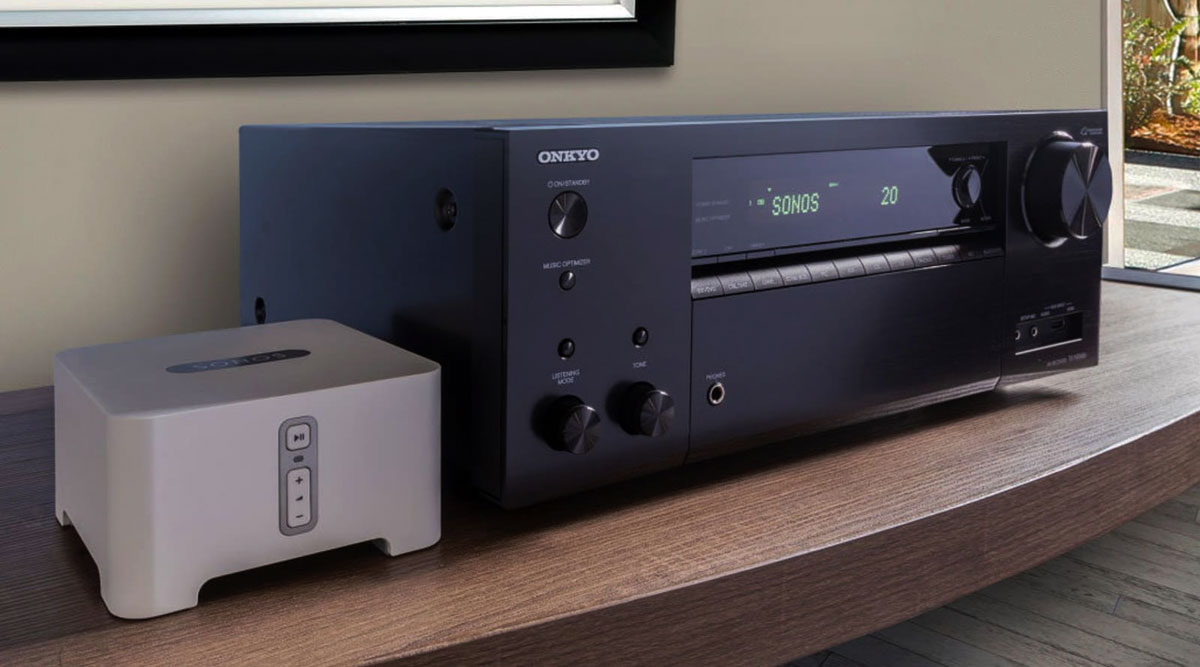
AV receivers are a crucial component of any home theater system, as they serve as the hub that connects all your audio and video devices together. However, with so many different models on the market, it can be challenging to know what features to look for when buying an AV receiver.
For many people, finding the perfect mattress can be a difficult task. It’s not an easy decision to make, and it’s often difficult to find out what is best for your body type and sleeping habits.
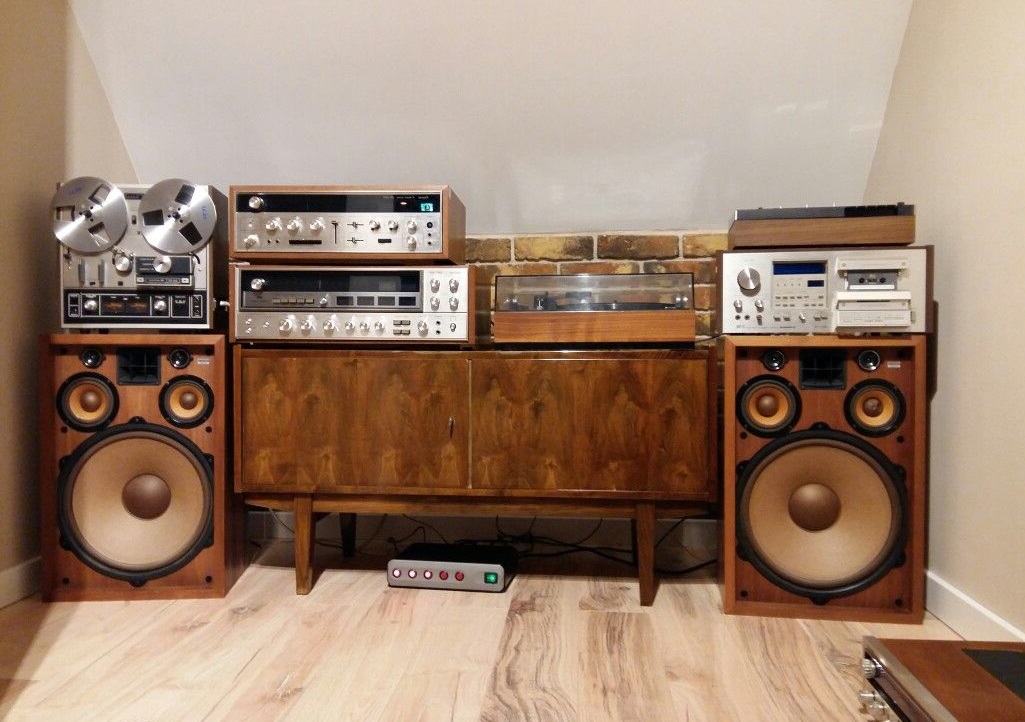
Everyone knows that time is merciless to everything in this world, but if the “life” of the flora and fauna of our planet is taken for granted and well studied, then there is an opinion that this does not apply to audio equipment at all. Moreover, many people think that if vintage audio equipment were made soundly and will last forever.